
For nearly 200 years, our brands have been at the forefront of health and hygiene, and our products are chosen by consumers around the world, millions of times each day to support their health and wellbeing. We now have 11 category-leading global ‘Powerbrands’ that make up over 80% of our net revenue for the company; brands that consumers rely on to care for themselves and those they love. “All our Powerbrands have a remarkable legacy of innovation and trust,” says Ryan Dullea, Reckitt’s Chief Category Growth Officer. “For generations, we’ve been part of people’s lives, continuously evolving to meet the changing needs of society.”
Origin of Dettol
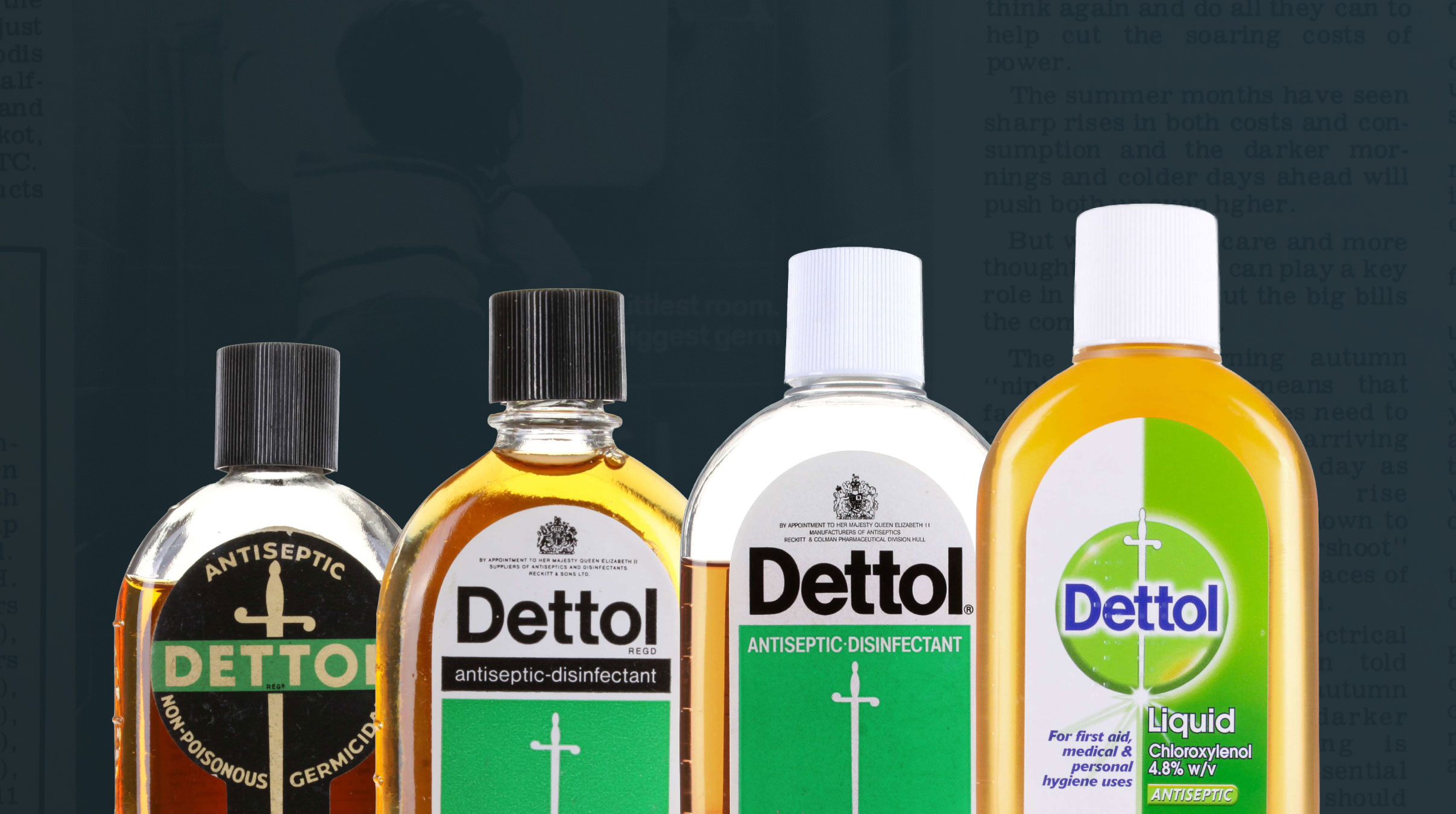
One of our oldest brands, Dettol has been at the centre of family life for almost a century. First used in hospitals in the 1930s, Dettol soon found its place in the home and, today, it’s a world-leading hygiene brand trusted by millions. As Dettol marks nearly 100 years of global impact, it remains the No1 antiseptic sold worldwide and used over 2000 times every minute across 124 countries.
Over the course of the last 20 years, we’ve seen a 58% increase in the growth of disease-causing germs1, so Dettol’s role in helping save lives is more relevant than ever. As the brand approaches its centenary, we want to celebrate Dettol’s heritage, and reveal the science, innovation and instinct to protect that lie at the heart of its success.
Pioneering germ protection solutions
Developed by leading bacteriologist Dr William Colebrook Reynolds, who joined Reckitt & Sons in Hull in 1929, Dettol was introduced in 1933 as an antiseptic liquid for doctors to use in hospitals. It was a game-changer. At the time, many people still believed that illness stemmed from imbalances in the body but Reynolds and his team embraced the more progressive thinking of the day: that disease could be caused by external factors – germs that Dettol could help eliminate.
The product was unique because it had the effectiveness of a disinfectant but, unlike other antiseptic solutions, it didn’t cause irritation if it was applied to the skin when diluted. It was, essentially, the world’s first hygienically effective and safe antiseptic.
Scientific leadership for over a century
Dettol’s preventative power quickly became evident. In the early 30s, many mothers and babies were dying from puerperal sepsis (blood poisoning after childbirth), so a medical trial was set up at a London hospital to investigate. Doctors were given Dettol to disinfect their supplies before delivering babies, and to cleanse wounds. The results were powerful. Just over two years later, the incidence of puerperal sepsis had fallen by 50%; and Dettol could launch to market with significant medical backing.
Ever since that first trial, Dettol has been building on its scientific success, using cutting-edge technology, know-how and resources to develop new formats to help protect more people, and save more lives. Reckitt scientists at our Research, Development and Innovation Centres, now located across the globe, are constantly innovating to develop products to meet the changing needs of society.
Decades of protection, innovation and impact
By the end of the 1930s, Dettol was protecting people in Australia, New Zealand, South Africa, India, Canada and South America. After World War II – following its widespread and successful use for first aid – Dettol became a favourite brand in Europe.
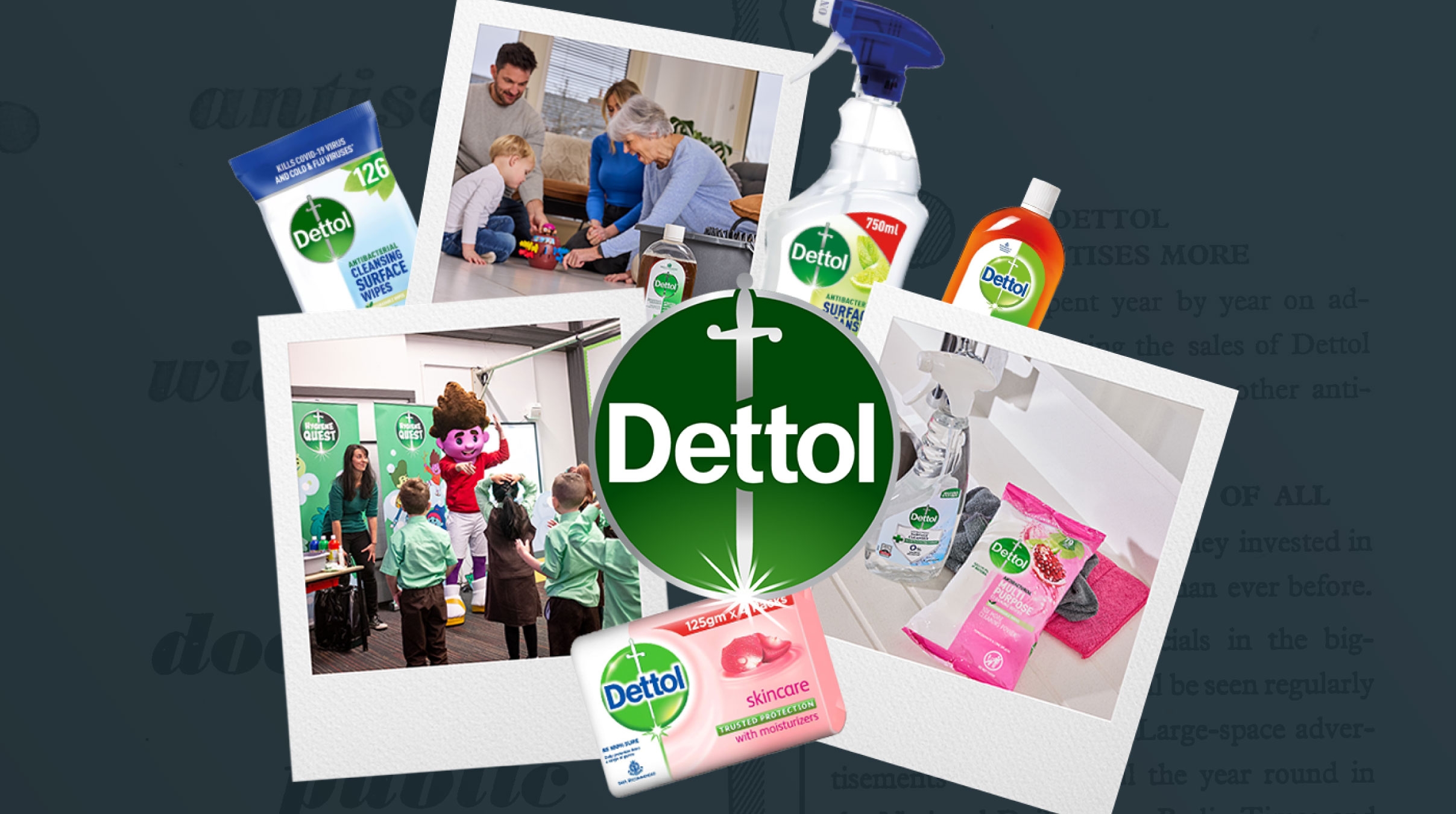
Today, Dettol has evolved from a simple disinfectant into a lifestyle health brand. The brand spans 13 product categories, from personal care to washing machine cleaners, comprising a portfolio of 200+ trusted germ-kill products that break the chain of infection.
It is making an impact in 124 countries – both in the home and through our involvement in global education and hygiene initiatives, such as the Hoga Saaf (“will be clean”) hand-washing programme in Pakistan and the groundbreaking Dettol Banega Swasth collaboration in India. As part of this initiative, the Dettol hygiene curriculum – which educates children on hand-washing and hygiene practices – is now implemented in 75% of schools in urban India. The results have been powerful: a 15% reduction in preventable illnesses like diarrhoea and 39% less absenteeism. Momentum peaked when we partnered with TikTok to create a hand-washing challenge – a campaign that went viral with 132 billion views and 75 million unique videos created.
Given our mission to make people’s lives better, we’re very proud that Dettol has gained the confidence of our consumers across the world. It’s the most trusted health brand in India and Malaysia; the most trusted Surface Brand in Saudi Arabia; the number one brand for germ protection in South Africa. Consumer confidence peaked during the COVID19 pandemic when people turned to Dettol as the best solution for germs. “Dettol became the number one penetration growth brand in the world,” explains Pankaj Duhan, Reckitt’s SVP of Germ Protection. “Not number one in germ protection. Not number one in surface care. Not number one in personal care. The number one penetration growth brand in the world.”
1. https://www.reckitt.com/media/dnofcts4/reckitt-focus-on-category-29-05-2025-transcript.pdf